Warm Up. Move Ready. Play Your Best.
Pickleball asks you to move quickly in multiple directions, rotate your trunk, reach with your arms, and repeatedly accelerate and slow down. A few minutes of purposeful movement before you play can help you transition from everyday activity into the demands of the court.
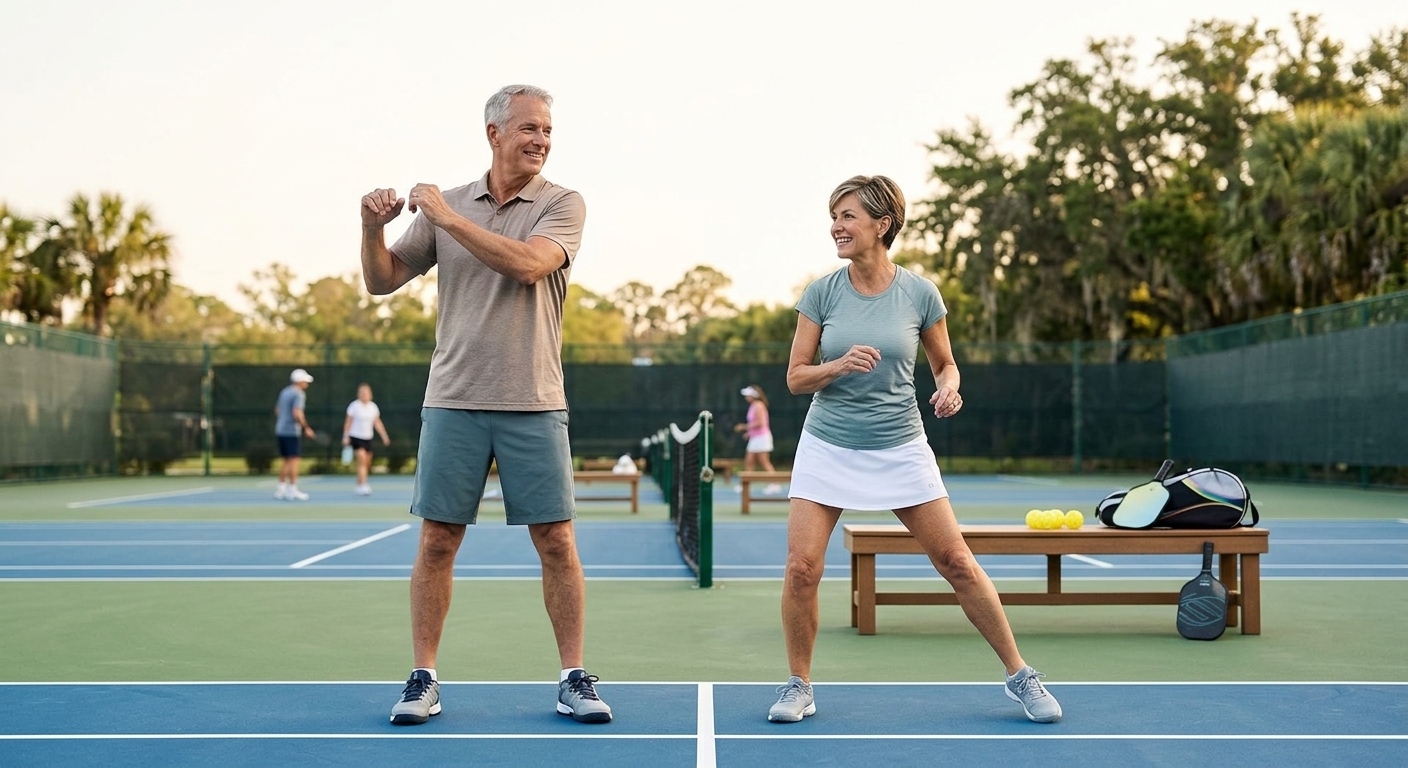
A practical warm-up window
A short, progressive warm-up gives you time to move from easy activity into the movements you will use on the pickleball court. Recent pickleball research specifically supports structured dynamic warm-up as part of a broader preparation strategy.
Move. Mobilize. Play.
A simple pickleball warm-up can progress from easy movement, to dynamic mobility and activation, and finally to controlled pickleball-specific movements.
Finish with court-specific movement
The final part of your warm-up can gradually introduce easy dinks, groundstrokes, volleys, serves, and controlled lateral movement before you begin playing at normal intensity.
Why Your Body Needs to Prepare for Pickleball
Pickleball Requires Quick Direction Changes
Pickleball involves short bursts of movement, lateral steps, lunges, reaching, stopping, and repeated changes of direction. A gradual warm-up gives you an opportunity to introduce these movements before you begin playing at full speed. Recent systematic-review evidence identifies rapid directional movement and lunging among important mechanisms associated with lower-extremity pickleball injuries.
Your Lower Body Drives Court Movement
Getting to a ball often means pushing sideways, stepping forward, stopping, or changing direction. Your hips, thighs, knees, ankles, and calves all contribute to these movements. Preparing the lower body with controlled movement can help you transition from everyday activity into court movement.
Pickleball Requires Rotation and Reach
Your trunk, shoulders, and arms work together during serves, returns, volleys, and other shots. A complete warm-up should therefore include controlled trunk rotation and upper-body movement rather than focusing only on the legs.
Balance Matters on the Court
Pickleball requires you to maintain control while moving, stopping, reaching, and returning to your ready position. Balance and proprioception are especially useful components of a well-rounded fitness routine for active adults. Current CDC guidance recommends that adults 65 and older include balance activities alongside aerobic and muscle-strengthening activity.
Your First Point Should Not Be Your Hardest Movement
Moving directly from sitting in the car or standing around the court into a fast lateral movement gives your body little opportunity to transition.
A better approach is to progress from easy movement to dynamic mobility and then to low-intensity pickleball-specific movements.
The goal is not to exhaust yourself before the game. It is to arrive at the first point feeling warm, mobile, balanced, and ready.
Your Pre-Game Pickleball Warm-Up
Think of your warm-up as a gradual progression rather than a collection of stretches. Start with easy movement, prepare the hips and legs, add trunk and upper-body movement, and finish with pickleball-specific activity.
The goal is to feel warm, mobile, balanced, and ready to play—not tired.
-
1. Easy Walk or March
1–2 minutes
Walk around the court or march comfortably in place. Gradually increase your pace as you begin to feel warmer.
Why it matters: Begins increasing your body temperature and heart rate without immediately placing high demands on your muscles and joints.
-
2. Shoulder Rolls and Arm Circles
8–10 repetitions each direction
Start with small shoulder circles and gradually make them larger. Follow with controlled arm circles, keeping the movement comfortable.
Why it matters: Prepares the shoulders and upper body for the repeated reaching and swinging involved in pickleball.
-
3. Arm Swings
8–10 repetitions
Swing your arms gently across the front of your body and then open them outward. Keep the movement relaxed and gradually increase the range.
Why it matters: Introduces controlled upper-body movement before you begin hitting the ball.
-
4. Hip Circles
6–10 repetitions each direction
Stand with your feet comfortably apart. Place your hands on your hips and make slow, controlled circles with your pelvis.
Why it matters: Introduces movement through the hips before the stepping, reaching, and directional changes of the game.
-
5. Leg Swings
8–10 repetitions per leg
Hold a stable support if needed. Swing one leg gently forward and backward through a comfortable range. Repeat with the other leg.
If comfortable, add controlled side-to-side leg swings.
Why it matters: Introduces dynamic movement through the hips and legs before lunging and changing direction.
Safety: Keep the movement controlled. You do not need to swing your leg as high as possible.
-
6. Mini Squats
8–10 repetitions
Stand with your feet approximately hip-width apart. Bend your knees and hips slightly, then return to standing. Keep the movement comfortable and controlled.
Why it matters: Activates the muscles of the legs and hips that contribute to court movement.
-
7. Side-to-Side Weight Shifts
8–10 each direction
Start with your feet comfortably apart. Shift your weight toward one side, then return to center and shift toward the other side.
As you become comfortable, make the movement slightly more athletic without turning it into a fast shuffle.
Why it matters: Introduces lateral weight transfer, an important movement pattern in pickleball.
-
8. Standing Trunk Rotations
8–10 repetitions per side
Stand comfortably with your feet slightly wider than hip-width apart. Place your arms across your chest or comfortably in front of you. Rotate your trunk gently from side to side.
Why it matters: Prepares your trunk for the rotational movements involved in hitting and reaching.
Important: Do not force the rotation or try to reach your maximum range.
-
9. Controlled Side Steps
5–8 steps each direction
Take several controlled steps sideways in one direction, then return to the starting position. Keep your knees slightly bent and stay balanced.
Gradually increase the speed while maintaining control.
Why it matters: Introduces lateral court movement before faster game play.
-
10. Progressive Pickleball Movements
2–3 minutes
Finish your warm-up with easy, sport-specific movements:
- Gentle dinks
- Easy groundstrokes
- Controlled volleys
- Light serves
- Easy lateral movement
- Gradually faster court movement
Start below game intensity and build gradually.
Why it matters: Helps transition from general movement into the specific patterns you will use during play.
-
Your 5–10 Minute Pickleball Warm-Up
If you are short on time, you do not need to perform every movement.
First 1–2 Minutes
Get Moving
- Easy walk
- March
- Gentle side steps
Next 2–3 Minutes
Prepare the Body
- Shoulder rolls
- Arm circles
- Hip circles
- Leg swings
- Mini squats
Next 1–2 Minutes
Add Court Movement
- Weight shifts
- Trunk rotations
- Controlled side steps
Final 2–3 Minutes
Get Pickleball Ready
- Easy dinks
- Groundstrokes
- Volleys
- Gentle serves
- Gradually faster movement
The progression matters more than the exact number of exercises.
Dynamic Movement Comes First
A warm-up should prepare you for the activity you are about to perform.
For pickleball, that means gradually introducing the movements you will use on the court: walking, lateral movement, reaching, rotation, bending, and controlled acceleration and deceleration.
Recent pickleball literature supports dynamic warm-up as part of a broader preparation strategy, particularly because the sport involves rapid directional changes, lunging, and other lower-body demands.
The objective is not to stretch as far as possible. It is to progressively become ready to move.
What About Static Stretching?
Static stretching is not inherently bad. It can be useful as part of a broader flexibility routine.
But immediately before a sport that requires quick movement, your preparation should not consist solely of long-held stretches.
Instead, prioritize progressive movement first. If you enjoy gentle stretching, it can be included without replacing the active portion of your warm-up.
The key distinction is between stretching as one component of preparation and stretching as the entire warm-up.
Your Warm-Up Should Not Make You Tired
A good warm-up should leave you feeling more prepared, not exhausted.
If your legs already feel fatigued or you are breathing heavily from repeated lunges and fast shuffles, you may be doing too much.
Start gently and build gradually.
Practice Your First Shots
Once your body feels warm, use a few minutes of easy pickleball movements before starting a competitive game.
Begin with softer shots and controlled movement. Progress toward normal speed as you become comfortable.
This creates a gradual bridge between your general warm-up and the actual demands of the game.
Give Your Lower Body Extra Attention
Lower-extremity movement deserves particular attention in pickleball.
A 2026 systematic review of 15 studies found that sprains, strains, and fractures were among the most common lower-extremity injuries reported in adult pickleball players. Falls and rapid directional movements were important injury mechanisms, and age 50 or older was a consistent risk factor across the reviewed literature.
That does not mean you should avoid movement.
It means your preparation should include the hips, legs, ankles, lateral movement, and balance—and your overall fitness routine should develop these qualities over time.
Warm Up for the Player You Are Today
Your ideal warm-up can change from day to day.
You may want more gradual preparation if:
- You have been sitting for several hours.
- You have not exercised recently.
- The weather is cold.
- You feel generally stiff when you arrive.
- You are returning to pickleball after time away.
On days when you already feel warm and mobile, you may need less preparation.
Adjust the pace and range of movement to how you feel that day.
Warm-Up Is Only One Part of Pickleball Fitness
A warm-up prepares you for today's game. It does not replace regular conditioning.
For adults 65 and older, CDC guidance recommends combining aerobic activity, muscle-strengthening activity, and balance work each week.
For pickleball players, that can mean:
Aerobic: Walking, cycling, swimming, or another activity you enjoy.
Strength: Squats, sit-to-stands, resistance-band exercises, calf raises, and other exercises that work the major muscle groups.
Balance: Supported single-leg exercises, balance drills, and other activities appropriate to your ability.
Mobility: Comfortable movement through the hips, trunk, shoulders, and ankles.
The warm-up is the bridge between your everyday activity and the game you are about to play.
Pickleball Can Be Part of an Active Lifestyle
The goal of a warm-up is not to make pickleball feel like a workout before the workout.
It is to help you prepare thoughtfully so you can get more enjoyment from the activity itself.
Pickleball can be one part of a broader active lifestyle that includes walking, strength training, mobility work, balance exercises, and other activities you enjoy.
Current CDC guidance emphasizes that regular physical activity remains important throughout life and that older adults benefit from a combination of aerobic, strengthening, and balance activities.
Keep Playing the Game You Enjoy
You do not need a complicated routine before every game.
A few minutes of progressive movement can create a simple transition from everyday activity to the court:
Move. Mobilize. Practice. Play.
The objective is not to eliminate every risk from an active sport. It is to prepare thoughtfully, build your physical capacity over time, and keep enjoying the game.
Medical Disclaimer
This article provides general educational and wellness information and is not intended to diagnose, treat, cure, or prevent any disease or medical condition.
Warm-up exercises should be appropriate for your individual fitness level and abilities. Perform movements in a controlled, comfortable range and stop if you experience sharp or worsening pain, dizziness, chest discomfort, unusual shortness of breath, or other concerning symptoms.
If you have an injury, significant mobility limitation, balance concerns, cardiovascular or other health conditions, or are returning to pickleball after a prolonged period of inactivity, consider speaking with your physician or a qualified physical therapist before beginning a new exercise routine.
Recommended For You


