Déplacez-vous librement. Continuez à jouer.
Le Pickleball demande à vos hanches, jambes, tronc, épaules et chevilles de se déplacer dans diverses positions. Un travail régulier de flexibilité peut aider à maintenir une amplitude de mouvement confortable et compléter l’activité de force, d’équilibre et d’aérobie qui soutiennent un mode de vie actif avec le pickleball.
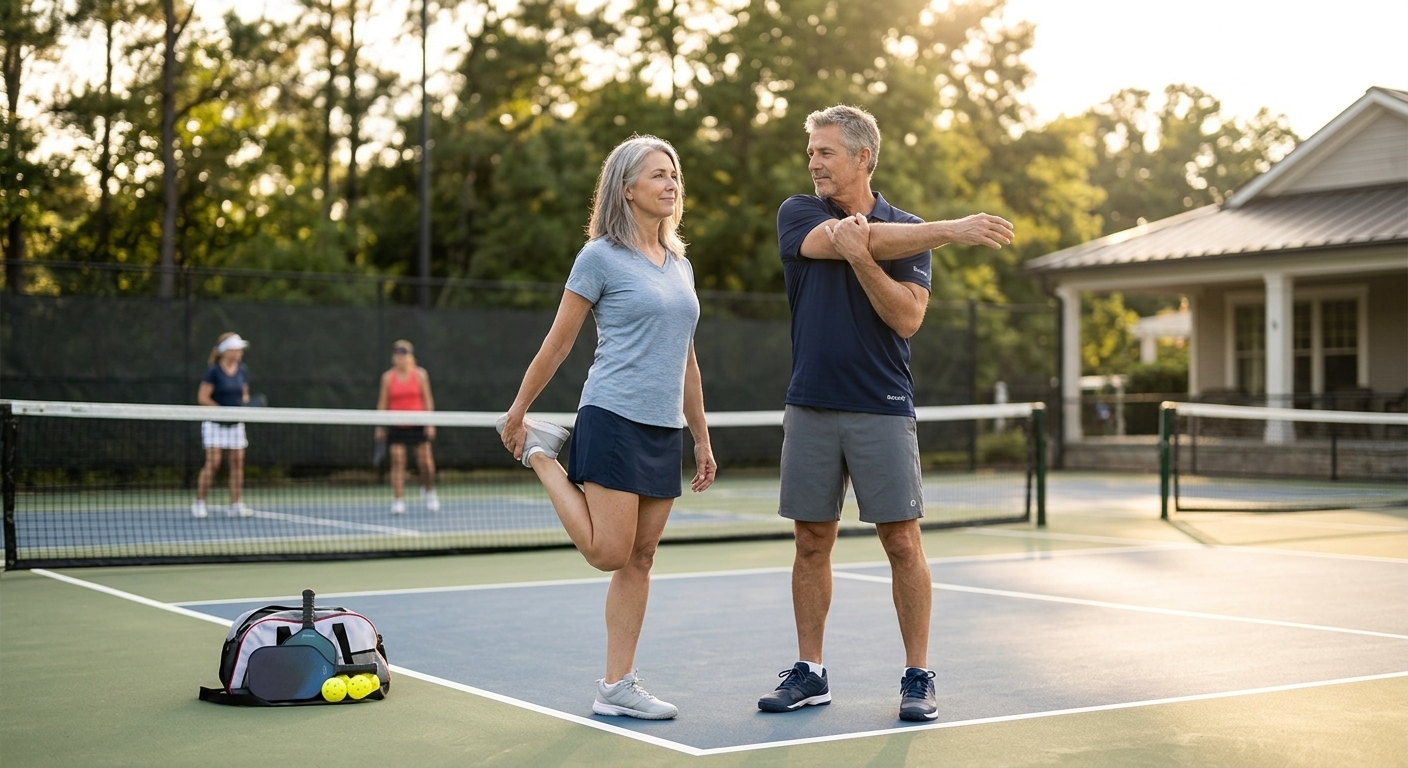
Un point de départ pratique pour un tronçon tenu
Une prise confortable de 20 à 30 secondes constitue un point de départ pratique pour de nombreux étirements statiques. L’objectif est d’obtenir une tension douce plutôt que de forcer l’amplitude des mouvements. Les prescriptions d'étirements peuvent varier en fonction de l'individu et du but de l'exercice.
Objectif hebdomadaire d’activité aérobie modérée
Pour les adultes de 65 ans et plus, les directives actuelles du CDC recommandent au moins 150 minutes d'activité aérobique d'intensité modérée chaque semaine, ou une combinaison équivalente d'activité modérée et vigoureuse.
Objectif hebdomadaire de renforcement musculaire
Il est également conseillé aux adultes de 65 ans et plus d’inclure des activités de renforcement musculaire au moins deux jours par semaine, ainsi que des activités qui améliorent l’équilibre.
Pourquoi la flexibilité est importante pour le pickleball
Pickleball utilise plusieurs modèles de mouvement
Le Pickleball combine la marche, les mouvements latéraux, l'atteinte, la flexion, la fente, la rotation et les changements de position répétés. Maintenir des mouvements confortables sur plusieurs zones du corps peut compléter les exigences physiques du jeu.
Vos hanches et vos jambes font plus que vous ne le pensez
Atteindre une balle courte, se déplacer latéralement, abaisser votre centre de gravité et revenir à la position impliquent tous les hanches et le bas du corps. Le travail de flexibilité peut compléter les exercices de renforcement et d’équilibre qui aident à maintenir la fonction du bas du corps.
Votre coffre a besoin d’une rotation confortable
Servir, revenir, faire une volée et atteindre impliquent des mouvements coordonnés à travers le tronc et le haut du corps. Un travail de mobilité doux peut vous aider à maintenir un mouvement de rotation confortable sans essayer de forcer une portée maximale.
Vos épaules et votre poitrine restent actives
Le pickleball implique d'atteindre et de balancer les bras à plusieurs reprises. Les épaules, la poitrine, le haut du dos et les bras contribuent tous à ces mouvements. Une routine de flexibilité équilibrée doit donc inclure le haut du corps ainsi que les jambes.
Les chevilles et les mollets contribuent au mouvement du terrain
Vos chevilles et vos mollets vous aident à marcher, à pousser, à changer de direction et à maintenir votre position sur le terrain. Une mobilité douce des mollets et des chevilles peut constituer un élément utile d’une routine de mouvement plus large.
La flexibilité n'est qu'une partie de la forme physique
Les étirements peuvent aider à maintenir ou à améliorer la flexibilité, mais ils ne doivent pas être considérés comme un substitut à la force, à l’activité aérobique, à l’équilibre ou à une préparation spécifique au sport. Les directives actuelles destinées aux personnes âgées mettent l’accent sur une combinaison de ces éléments d’activité physique.
Votre routine d’étirements au pickleball
Ces étirements doux sont conçus pour compléter un style de vie actif au pickleball. Utilisez-les après avoir joué, lors d'une séance de mobilité distincte ou dans le cadre d'une routine de flexibilité plus large.
Déplacez-vous lentement dans chaque position et restez dans une plage confortable. Vous devriez ressentir une légère tension, sans douleur aiguë, pincement, engourdissement, picotement ou besoin de forcer le mouvement.
Important:Pour une préparation immédiate avant le match, utilisez un échauffement dynamique plutôt que de faire des étirements statiques prolongés la partie principale de votre routine. Voir notreExercices d'échauffement Pickleballarticle pour une séquence d'avant-match progressive.
-
1. Étirement du mollet debout
20 à 30 secondes par côté
Tenez-vous face à un mur ou à un support solide. Reculez d’un pied et gardez le talon confortablement au sol. Pliez légèrement le genou avant et déplacez votre poids vers l'avant jusqu'à ce que vous sentiez un léger étirement du mollet de la jambe arrière.
Gardez le talon arrière baissé et évitez de rebondir.
Pourquoi c'est important :Les mollets et les chevilles contribuent à la marche, à la poussée et au changement de direction sur le terrain.
Modification :Réduisez la distance entre vos pieds si l’étirement vous semble trop fort.
-
2. Étirement des quadriceps debout
20 à 30 secondes par côté
Tenez-vous près d’un support solide. Pliez un genou et ramenez doucement votre talon vers votre siège, en tenant votre cheville ou la jambe de votre pantalon si cela est confortable.
Gardez vos genoux relativement rapprochés et évitez de tirer le pied avec force.
Pourquoi c'est important :Fournit un étirement doux pour l’avant de la cuisse et complète le travail de mobilité du bas du corps.
Modification :Tenez une chaise ou un comptoir d’une main pour garder l’équilibre.
-
3. Étirement des fléchisseurs de hanches à moitié agenouillés
20 à 30 secondes par côté
Placez un genou sur une surface confortable et l’autre pied vers l’avant. Gardez votre torse droit et déplacez doucement vos hanches vers l'avant jusqu'à ce que vous sentiez un étirement à l'avant de la hanche de la jambe agenouillée.
Ne cambrez pas le bas du dos pour créer plus de mouvement.
Pourquoi c'est important :Fournit un léger étirement de l'avant de la hanche, une zone qui peut sembler restreinte après une position assise prolongée.
Modification :Placez une serviette pliée ou un tapis d'exercice sous le genou à genoux. Si s'agenouiller est inconfortable, remplacez-le par un étirement debout des fléchisseurs de la hanche.
-
4. Étirement des ischio-jambiers
20 à 30 secondes par côté
Asseyez-vous vers l’avant d’une chaise solide et étendez confortablement une jambe vers l’avant avec le talon au sol. Gardez le genou légèrement plié et penchez-vous doucement vers l'avant à partir de vos hanches jusqu'à ce que vous sentiez un étirement confortable le long de l'arrière de la cuisse.
Gardez votre dos dans une position confortable plutôt que de l'arrondir de manière agressive.
Pourquoi c'est important :Fournit une manière douce de travailler la flexibilité à l’arrière de la cuisse.
Modification :Gardez la jambe étendue moins droite si l'étirement vous semble trop fort.
-
5. Étirement en quatre assis
20 à 30 secondes par côté
Asseyez-vous sur une chaise solide avec les deux pieds au sol. Placez une cheville sur la cuisse opposée. En gardant votre dos confortable, penchez-vous doucement en avant à partir de vos hanches jusqu'à ce que vous sentiez un étirement autour de la hanche et de l'extérieur de la fesse.
Pourquoi c'est important :Fournit un léger étirement autour de la région des hanches et des fessiers.
Modification :Si croiser la cheville sur la cuisse opposée est inconfortable, gardez les deux pieds au sol et choisissez un autre étirement confortable de la hanche.
-
6. Étirement doux des fentes latérales
15 à 20 secondes par côté
Tenez-vous debout, les pieds confortablement écartés. Déplacez votre poids vers un côté tout en pliant doucement ce genou et en permettant à la jambe opposée de se redresser.
Gardez vos mouvements superficiels et contrôlés.
Vous devriez sentir un léger étirement à l’intérieur de la jambe la plus droite.
Pourquoi c'est important :Fournit un mouvement à travers la région intérieure de la cuisse, ce qui contribue au mouvement latéral du terrain.
Sécurité :Ne plongez pas profondément dans la position et ne forcez pas la cuisinière.
-
7. Rotation du tronc debout
6 à 8 répétitions contrôlées par côté
Tenez-vous confortablement debout, les pieds légèrement plus larges que la largeur des hanches. Placez vos bras sur votre poitrine ou confortablement devant vous.
Faites pivoter lentement votre tronc d’un côté à l’autre dans une plage confortable.
Pourquoi c'est important :Maintient un mouvement de rotation confortable à travers le tronc.
Important:Il s’agit d’un exercice de mobilité contrôlée plutôt que d’un étirement statique prolongé. Ne forcez pas la rotation.
-
8. Étirement de la poitrine et des épaules
20 à 30 secondes par côté
Tenez-vous à côté d’une porte ou d’une surface verticale solide. Placez votre avant-bras contre la surface et éloignez doucement votre corps jusqu'à ce que vous sentiez un étirement confortable sur la poitrine et le devant de l'épaule.
Répétez de l’autre côté.
Pourquoi c'est important :Fournit un mouvement doux pour la région de la poitrine et des épaules après des activités impliquant des mouvements répétés des bras.
Modification :Gardez le bras plus bas si le lever est inconfortable.
-
9. Portée du haut du dos
20 à 30 secondes
Étendez vos bras vers l’avant et passez doucement vos mains tout en permettant au haut de votre dos de s’arrondir légèrement.
Gardez votre cou détendu et évitez de forcer le mouvement.
Revenez lentement à une position verticale confortable.
Pourquoi c'est important :Fournit un mouvement doux dans le haut du dos et les épaules après avoir atteint et balancé plusieurs fois.
-
Comment utiliser ces étirements
Vous n’avez pas besoin d’effectuer chaque étirement à chaque fois.
Après le pickleball
Choisissez plusieurs étirements qui vous semblent appropriés après votre partie.
Tenez chaque étirement statique confortablement pendant environ20 à 30 secondes, sans rebondir ni forcer la portée.
Un jour sans jeu
Utilisez plusieurs de ces mouvements comme une courte séance de flexibilité ou de mobilité.
Vous pouvez vous concentrer sur les zones qui semblent particulièrement restreintes tout en gardant la routine globale confortable et équilibrée.
Avant le pickleball
Utilisez des mouvements dynamiques plutôt que de faire des étirements statiques la partie principale de votre échauffement.
Commencez par la marche, la marche, les cercles de bras, les mouvements des hanches, les balancements des jambes, la rotation contrôlée du tronc et les mouvements progressivement plus rapides spécifiques au pickleball.
Pensez : dynamique avant le jeu, flexibilité après le jeu ou en session séparée.
Les étirements ne sont pas la même chose que l'échauffement
Ces deux activités ont des objectifs différents.
UNéchauffementprépare progressivement votre corps aux mouvements et à l’intensité de l’activité que vous vous apprêtez à réaliser.
Étirementest principalement utilisé pour travailler la flexibilité et l’amplitude de mouvement confortable.
Pour le pickleball, votre routine d’avant-match doit mettre l’accent sur les mouvements progressifs. Les étirements statiques peuvent être utilisés après le jeu ou pendant une séance de flexibilité distincte.
Les directives fédérales en matière d'activité physique reconnaissent les exercices de flexibilité comme un élément approprié d'un programme d'exercices et notent que les étirements peuvent améliorer la flexibilité. Cependant, il n’a pas été démontré que les activités de flexibilité réduisent à elles seules le risque de blessures liées à l’activité.
Ne forcez pas un étirement
Un tronçon utile doit être contrôlé et gérable.
Vous remarquerez peut-être une légère tension, mais vous ne devriez pas ressentir de douleur aiguë, de brûlure, d'engourdissement, de picotement ou un fort besoin de vous échapper de la position.
Évitez de rebondir.
Avancez progressivement dans l'étirement, maintenez une position confortable, puis revenez lentement.
Une plus grande portée n’est pas automatiquement meilleure.
Votre meilleure amplitude de mouvement est celle que vous pouvez contrôler
La flexibilité n'est pas une compétition.
Le but n’est pas de toucher vos orteils, d’amener votre talon complètement vers votre corps ou de tourner le plus loin possible.
Pour un adulte actif, une flexibilité utile signifie avoir suffisamment de mouvements confortables pour effectuer ses activités quotidiennes et récréatives avec contrôle.
Associez le travail de flexibilité à l’entraînement de force et d’équilibre pour construire une base physique plus complète.
Des recherches récentes suggèrent que les interventions d'étirement peuvent améliorer certaines mesures de la fonction physique chez les personnes âgées, bien que les résultats varient selon le type et la conception du programme d'étirement.
Concentrez-vous sur les domaines utilisés par le Pickleball
Vous n’êtes pas obligé d’étirer tous les muscles de votre corps.
Pour le pickleball, une routine pratique peut se concentrer sur :
Mollets et chevillespour la marche et les déplacements sur le terrain.
Hanches et cuissespour marcher, se pencher et se précipiter.
Ischio-jambierspour la flexibilité du bas du corps.
Troncpour une rotation confortable.
Épaules et poitrinepour atteindre et se balancer.
Cela vous donne un cadre simple sans transformer la flexibilité en un entraînement compliqué.
Les étirements fonctionnent mieux dans le cadre d’un plan plus vaste
La flexibilité n’est qu’un élément pour rester performant sur le terrain.
Pour les adultes de 65 ans et plus, les directives du CDC recommandent au moins 150 minutes d'activité aérobique modérée chaque semaine, une activité de renforcement musculaire pendant au moins deux jours et des activités qui améliorent l'équilibre.
Pour un joueur de pickleball, cela peut inclure :
Activité aérobie :Marche, vélo, natation ou autre activité agréable.
Dosage :Squats, assis-debout, exercices avec bandes de résistance, levées de mollets et autres exercices qui font travailler les principaux groupes musculaires.
L’équilibre :Exercices sur une seule jambe pris en charge et autres activités d’équilibre appropriées.
Mobilité:Étirements confortables et mouvements contrôlés.
Préparation sportive :Un échauffement dynamique avant de jouer.
La combinaison est plus précieuse que de se concentrer uniquement sur les étirements.
Après une longue journée assise
Les joueurs de pickleball passent souvent du temps assis avant et après un match : se rendre sur le terrain, travailler à un bureau ou se détendre à la maison.
Une courte routine de mouvement peut être un moyen utile de rompre les périodes d’inactivité.
Vous n’avez pas besoin d’attendre de vous sentir raide.
Des mouvements simples tels que la marche, la mobilité des hanches, la rotation du tronc et des étirements doux peuvent être intégrés tout au long de la journée.
Ajustez votre routine à votre corps
Votre flexibilité peut varier d’un jour à l’autre.
Vous pourriez vous sentir différent après :
- Un long trajet
- Une journée au bureau
- Un jeu particulièrement actif
- Voyage
- Une mauvaise nuit de sommeil
- Une période sans exercice
Il n’est pas obligatoire d’effectuer chaque étirement chaque jour.
Choisissez des mouvements qui vous semblent appropriés et ajustez la plage et la durée en fonction de vos capacités actuelles.
Quand obtenir des conseils professionnels
Si vous avez une limitation persistante des mouvements, une blessure antérieure, des problèmes d'équilibre importants ou des difficultés à effectuer un exercice en toute sécurité, un physiothérapeute ou un autre professionnel de la santé qualifié peut vous aider à déterminer quels mouvements vous conviennent.
Les étirements ne doivent pas être utilisés pour surmonter une blessure ou des symptômes inexpliqués.
Clause de non-responsabilité médicale
Cet article fournit des informations générales sur l’éducation et le bien-être et n’est pas destiné à diagnostiquer, traiter, guérir ou prévenir une maladie ou un problème médical.
Les exercices d’étirement et de mobilité doivent être adaptés à votre niveau de forme physique et à vos capacités individuelles. Effectuez des mouvements lentement et dans une plage confortable. Arrêtez si vous ressentez une douleur aiguë ou qui s'aggrave, un engourdissement, des picotements, des étourdissements, une gêne thoracique, un essoufflement inhabituel ou d'autres symptômes préoccupants.
Si vous souffrez d'une blessure, d'une limitation importante de votre mobilité, de problèmes d'équilibre, de problèmes cardiovasculaires ou autres, ou si vous recommencez à faire de l'exercice après une période d'inactivité prolongée, envisagez de parler à votre médecin ou à un physiothérapeute qualifié avant de commencer une nouvelle routine d'exercice.
Recommandé pour vous


